Tuesday, July 11, 2017

Upon Reading. . . .

UPON READING A MARVEL COMICS BACKPACK ON A TEENAGER IN LINE IN FRONT OF ME AT A BUS STOP

marvel comics covers 

Depicted are fragments of covers from classic Marvel issues of the past—“Iron Man” “Thor”—etc. Noticeable is the amount of pure HYPE which went onto the issues:

“Iron Man Returns to Face TWO Super Villains” kind of thing.

Stan Lee and Jack Kirby created a massive media empire from nothing through extreme ballyhoo.

A reminder that I have to do some of that at New Pop Lit. Especially with the ALL-TIME AMERICAN WRITERS TOURNAMENT, currently on brief hiatus at this blog.

Can we turn classic American writers into superheroes?
*******

Friday, May 19, 2017

A Tale of Two Editors

I had a brief impromptu twitter exchange yesterday with long-time publishing Insider Peter Ginna. The exchange emphasized to me the gulf which exists between those inside and outside the New York City lit-media bubble.

I mentioned to Ginna something I call the “Sholokhov-Solzhenitsyn Spectrum” of commitment to artistic integrity and freedom of speech. This, after he mentioned, in a positive way (he disputes this characterization), Simon & Schuster abandoning their commitment to publish free speech provocateur Milo Yiannopoulos after a flurry of protest by the established literary herd. I wondered where Mr. Ginna placed himself on that spectrum. Though he protested much that the “Big 5” combination of publishing conglomerates based in New York was “not a monolith,” he never answered my question.

****

Not surprising, in that Peter Ginna and myself come from different universes. On the subject of literature we speak different languages. At an age when he was attending Harvard and Oxford, I was working in the industrial bowels of Detroit—not the best training ground for a literary person, one would think. But my experiences gave me a sense of how this civilization works, as I saw in marine terminals and railyards how raw material is poured into a city, then creatively turned into something meaningful. It was also while clerking nights in a railyard at the heart of Detroit, near the fiery Rouge river, for many months, that to pass the time between trains I read, and read, and read—as comprehensive a syllabus as one could find at Harvard. If not Oxford.

While Ginna was paying his dues inside the bureaucracies of Big Publishing, I was paying my dues in the indy “zine” scene, creating not through staffs and levels of bureaucrats, but by hand, a series of publications, which I wrote, proofread, designed, drew on, colored, packaged—then marketed and sold. Every aspect of literary creation. On a vastly smaller level than the “Big 5” of course, with a more concise, more enthusiastic audience. It was a smaller scale view of literature, no doubt. The difference, perhaps, between the first Henry Ford making in a backyard shed an automobile out of bicycle parts—and his grandson “Hank the Deuce” inheriting a gigantic many-layered enterprise, in which someone at his level is far removed from the factory floor. Within which every aspect of the creative process—engineers; designers; marketers; accountants—is isolated from the others.

The result? With publishing, I sensed from my exchange a continuing sense of casual complacency, fluctuating from condescension in the face of contrary ideas, to upright defensiveness.

Yet if an automobile company can’t afford to be complacent (witness the events of 2008), how less can an art? And yes, literature is a business SECOND. First, it’s an art.

****

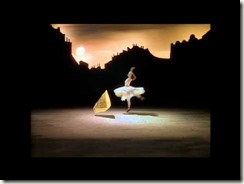
red shoes

I thought of this last night, when my girlfriend (and NPL co-editor) and I watched the end of the classic 1948 film “The Red Shoes,” then followed this by viewing a 1967 Soviet movie version of “Anna Karenina.” Or at least tried to watch the latter, because every aspect of the Soviet film was awful. Particularly the casting and acting. The plot and much of the dialogue were taken from Tolstoy, but it wasn’t enough to save the flick.

We were forced to ask, “What happened?”

After all, in “The Red Shoes” the Russian impresario, dancers, artists, are all portrayed as geniuses. (Indeed, the movie itself is an unparallleled work of genius.) Yet the creators of the Soviet version of a classic Tolstoy novel were obvious dullards—going through the motions of creating a classic work of art but, like wooden puppets, lacking human or artistic spark.

We see two causes.

1.) The Russian characters in “The Red Shoes” would have to be expatriates who fled their native land after the Bolsheviks took power. Looking at the Soviet film, one can infer that the 1917 revolution and Bolshevik consolidation of power chased out—or liquidated—all creative talent. The premise no doubt was that new talent would rise up after the ostensible “liberation” of the masses—but it didn’t happen. Maybe because those masses were never really liberated, only further enslaved.

2.) One can see the difference between art produced by a tight group of creative talent, and that produced by a gigantic top-heavy bureaucracy required to conform to politically correct standards as laid down by political commisars. A ballet company, as shown in “The Red Shoes,” is a tight group of talented individuals each retaining their individuality. But so was “The Archers,” the film company founded by Michael Powell and Emric Pressburger, the geniuses behind the film. They not only had immense creative ability themselves, but, as important, the ability to spot and enlist other hyper-talented individuals into their project. Whether an actual Russian expatriate in the person of Leonide Massine, or the best cinematographer maybe ever in Jack Cardiff (the colors drip off the screen), or the surreally-talented actor Anton Walbrook and amazing dancer (and amazingly beautiful) Moira Shearer. The film is a paean to beauty, and to Art with a capital A.

The Soviet film? Merely a dud. The argument—my argument—is that massive bureaucracy, if too massive, in the realm of art if not autos, produces mediocrity.

Those involved in the creation of art should ask for more. Much more.

Thursday, May 04, 2017

Who’s the Best American Writer?

I HAVEN’T BEEN POSTING much as this blog, because I’ve been helping to set up New Pop Lit's upcoming big event, the All-Time American Writers Tournament. (Long-time readers may remember I started something similar once at another blog several years ago.)

Who’s your favorite American writer? Novelist, poet, playwright, historian, or story writer? All will be considered—but there are so many candidates to choose from that we need input. Feel free to add yours.

Suggestions or 200-word arguments for a particular candidate can be sent to newpoplitATgmail.com.

Or, comments can be added to NPL’s Interactive blog, where most of the action will occur. Progress reports will also be given at the main site’s home page, as well as at NPL’s News blog.

Hurry! Get your choices into the brackets.

Wednesday, April 19, 2017

The Springsteen Paradox

NEWS ITEM: Rocker Bruce Springsteen seen on billionaire’s superyacht in Tahiti.

Springsteen

Bruce Springsteen has made a career out of being a self-appointed spokesman for the American working class. The wealthier he becomes, the harder he works on the part—as if prodded by a fear of being out of touch; losing his authenticity, his connection to reality. This is similar to certain trendy novelists (Stephen King; George Saunders; Mary Gaitskill; Joyce Carol Oates). The more they’re captives of the conglomerate publishing system, the more determined they are to prove their activist credentials. They “care.”

Once, the pop singer was a modestly-paid performer, putting on a tuxedo to perform in a nightclub. Today, Bruce Springsteen is a corporation unto himself, employing an army of musicians, agents, producers, accountants, roadies and bodyguards. When on tour, the show travels from city to city in a caravan of loaded tractor-trailers, like a Broadway production. Think Springsteen the Industry.

Picture Bruce by a swimming pool, wearing an expensive silk robe. He sighs. The people call. Time to do a concert. More millions of dollars to generate. He takes his costume from a walk-in closet larger than many homes. No tuxedo for the “Boss.” Instead, the grimy sweatband; the faded jeans and ripped t-shirt. The Bruce Springsteen Minstrel Show; adopting the garb of the dispossessed, like affluent author Barbara Ehrenreich putting on a waitress costume. It’s not Al Jolson on bended knee singing about “Mammy,” but in its own way it’s as distasteful.

The farther removed in time Springsteen becomes from his humbler days, the more with that humble lifestyle he becomes identified.

The liberal media love it! Writer for The Nation Eric Alterman has stated he’s seen over 200 Bruce Springsteen concerts. Tickets aren’t cheap. Alterman has spent a significant amount of money assuring himself that, like Bruce, he cares about downtrodden people. His message is ultimately the same as Springsteen’s. “I’m one of the good people.” In its modest way, The Nation is as much a part of celebrity culture as People magazine.

Is there safety to the Springsteen presentation, because of its lack of immediacy? Springsteen, after all, is not going to call for the confiscation of lavish estates. He’s not about to begin working in a gas station or a factory. Supporting him, indulging in his make-believe, is a harmless outlet which allows many of America’s most successful social-climbing individuals to enjoy their success yet clear their conscience and retain their self respect.

****

There are many variations of the Springsteen Paradox. Take a rock musician on the other end of the ideological spectrum, Ted Nugent. “The Nuge” could buy a chain of supermarkets loaded with steaks, yet, for all the world to hear and see, affirms his need to hunt game in the wild to feed his family. Man, life is a struggle for survival! (Just ask his accountant.)

Nugent collects ever more weapons and pumps more iron, training for war. In the Sixties, when Vietnam was a real possibility for him, his patriotic belligerency was, needless to say, significantly tamer.

It’s all about an instinctive need for authenticity. These performers sense their poses are fake. The more they suspect this, the harder they have to work to keep away the truth—from themselves.

Wednesday, March 29, 2017

Cultural Balkanization

FUSION OR FRAGMENTATION?

The cultural mandarins in New York City are pushing for cultural fragmentation. At least, that’s the impression given by New York Times Magazine’s recent March 12 “Music Issue.” All is identity. In the Introduction to the issue staff writer Nitsuh Abebe says this:

“In 2017, identity is the topic at the absolute center of our conversations about music.” (“Our” being individuals at the newspaper?) And: “For better or worse, it’s all identity now.”

Abebe discusses the 1950’s as the “last great gasp” of “ethnicities,” but his is a distortion of American musical history. What made the 1950’s noteworthy is the fusion which took place between various threads of roots music, becoming “rock n’ roll”—melding into the pop music of the day and displacing it. The most visible of the new artists, Elvis Presley, counted among his influences country, gospel, rhythmn and blues, and Italian-American crooners like Dean Martin. Presley’s movies would place him continually in Latin and Hawaiian settings, motifs from those cultures’ music appearing in his songs—which were often as not written by Jewish-American songwriters in the Tin Pan Alley tradition. Elvis even did knockoffs of operatic arias!: “It’s Now or Never,” and “Surrender.” In other words, everything was fair game.

Elvis placed songs in the #1 position on the three main charts; pop, r & b, and country; the first time this happened.

Not just Presley fused various styles into his presentation and art. Chuck Berry’s first hit, “Maybelline,” was a reworking of a country song. Further, Berry’s voice had a ringing quality to it that for the time sounded “white.”

The best example of conscious fusion in the music of the 1950’s and early 60’s comes with Motown founder Berry Gordy Jr., who crafted a sound he believed would appeal to everyone. R & B blended with pop form. Gordy marketed this as “The Sound of Young America”—and it was, as kids from all backgrounds bought the records.

Pop music then was truly and distinctively American, embracing the musical backgrounds of all Americans.

This seems a more unifying goal to have, than the fragmentations of now.

****

In the Times Music Issue we get not just identity, but obsession with identity. A good example from the issue is the essay by Jenny Zhang. Hers is not the positive outlook of a Berry Gordy, who believed anything could be accomplished—and then went and accomplished it. Zhang mentions the “ways in which white supremacy had warped each of us.” Yet she’s confused about fundamentals. In discussing DIY/punk music of the 1990’s, Zhang says “no one much questioned why a subculture that saw itself as rebelling against the establishment was quite so dominated by white men.”

But it was an economic and business rebellion (as was the print-zine movement of the same decade, which I was part of). A rebellion against monopoly and elitism. Against tops-down thinking, and the idea that all culture must come out of L.A. and New York. A business rebellion in the same way rock n’ roll, promoted by carny barkers and street hustlers like Colonel Tom Parker, Sam Phillips, Alan Freed, and Dick Clark, was. Hundreds of upstart storefront record companies like Sun Records took away half the market share of the “Big Four” record giants—an almost unprecedented business revolution (which led to pushback via Congressional “payola” hearings intended to bust the newcomers).

Most of the DIY “punks” of the 1980’s and 90’s were white men, sure. But let’s remember that at any time in American history, including now, a huge segment of the white male population lives in grinding poverty. For an example of this study the biography of Kurt Cobain, who through the popularity of his band Nirvana took subculture grunge music, originally recorded and promoted by small Northwest outfits like Sub Pop, into the cultural mainstream.

****

What can be said finally about the Times Music Issue?

A.) Maybe that someone is pushing an agenda—agendas being pushed are generally in the interest of power or dollars. I opt for multinational conglomerates as the chief culprit, who today control most of the music business and whose focus isn’t on authentic American culture, but global profits.

B.) Also that when new cultural changes begin happening (see literature now) those well-schooled souls inhabiting Manhattan skyscrapers are often the last to know.

*******

(At New Pop Lit we believe in American literature—and will demonstrate this with our upcoming “All-Time American Writers Tournament.”)

Monday, March 06, 2017

Closed Circuit

DECONSTRUCTING GEORGE SAUNDERS

Is the New York literary establishment out of touch with what’s happening in middle America—and in literature itself?

One can make a strong case for that based on the recent Bomb magazine conversation between lauded authors Sam Lipsyte and George Saunders. The smugness, even arrogance of their viewpoint is palpable.

They (two of the more privileged writers in America) are out to fight oppression. They let you know up front they’re the good guys. The rightness of their viewpoint is assumed. Never once—not for a microsecond—is there an attempt to examine their own premises. Why would they?—when the groupthink of the moment of the literary establishment backs their view on the new administration 99.8%. Which leaves Saunders and Lipsyte in the position of moral crusaders—or at least, missionaries for their cause—out to convert the world.

George Saunders explains how he performed, for a Trump supporter, “an English 101 deconstruction” of an article; going through the text for her “point by point.” Kind of like a Twelve Step-program intervention. Saunders dashed it off—the “101” assuring us it wasn’t too great of a task. He bemoans the necessity of having to do this—but someone has to reach out to the ignorant mob. His task being to re-educate the little people of America who unwittingly voted for the wrong person.

In his intellectual complacency, George Saunders doesn’t realize one could easily deconstruct his own positions, as expressed in the interview. “Point by point.”

I’ll look at two of them.

FIRST is the ready use of the word “fascist,” keeping with an ongoing narrative about the new administration. The two esteemed writers seem not to have read Orwell’s classic essay, “Politics and the English Language,” in which Orwell equates the use of such emotionally-charged codewords with an absence of thought. With becoming an intellectual puppet.

“Fascism” is one of those vague terms which can mean anything and everything. If it means the powerful state regulating the lives of the populace, for their own benefit; or directing the culture; or a combination of big business, government, and academia; or an imperialist/interventionist foreign policy—then one might be speaking about Trump opponents as much as his supporters.

Curiously for these two anti-fascists who inhabit prestigious positions at universities—those renowned bastions of free thought—there’s no mention of the fascist-like thuggery used to violently shut down, at universities, the unorthodox views of writers Milo Yiannopoulos and Charles Murray. George Saunders wants to examine America “point by point,” but not too thoroughly, and not all of it.

There’s also nary a peep from our anti-fascist established literary world about actual fascist regimes such as Iran, which executes dissident writers. Who remembers Hashem Shabani, hung by the regime two years ago?

No unease either by Lipsyte and Saunders, Saunders and Lipsyte, at the recent Oscar given to film director Asghar Farhadi, an apologist, or at least advocate, for the regime. Call him the Mikhail Sholokhov or Leni Riefenstahl of Iran.

A Second point I could make in deconstructing George Saunders is when he says, in response to the notion that America is falling apart, “Have you looked at the unemployment rate lately?”

Wow! Very smug. Quite an answer. One can see the expression on Mr. Saunders’ face as he says this. BUT—the official unemployment rate is one of the phoniest statistics going, in that it doesn’t take into account the enormous number of people who’ve dropped out of the workforce. This is shown by a large spike in the number of Americans on disability, food stamps, and other support systems. In the past ten years I’ve been on unemployment; been unemployed and not on unemployment; and underemployed. I have a living sense of the guidelines, what’s counted and what’s not.

A better indication might be the nation’s labor participation rate, which has been hovering around 62% one of the lowest levels ever. Over 94 million Americans are out of the work force. A more realistic unemployment rate has been given by various authorities as anywhere from 9.5% to 20%.

Beyond Saunders’ glib response is the actuality of America itself. From my perspective in Detroit, the idea that America is NOT falling apart is jaw-dropping. What planet are these men living on? Bubble writers for sure. Not just Detroit is in ruins, but many of its outlying suburbs. Lately I’ve been traveling on a regular basis through the long stretch of downriver communities. As I do I count endless numbers of closed businesses—closed for years—along Fort Street, the main avenue. Away from Fort, in cities like Lincoln Park and Southgate, are more than a few large for-lease shopping plazas, every store closed. Parking lots empty, windows boarded. Ghost towns within ghost towns.

The economic depression of the past ten years hit not just Michigan, but the entire industrial heartland of America. Do Saunders and Lipsyte have a clue as to why these states voted for Trump? Do they have an inkling that (evident flaws aside) there were solid economic reasons to vote for the man?

If George Saunders with his “combative compassion” ever wants to decontruct the damage so-called free trade has done to America and its working people, or how it’s enriched a handful of multi-nationals and billionaires but no one else, he can do so. He could discuss as well such phenomena as the ongoing opioid/heroin epidemic taking place outside elite bubbles. Perhaps understand where the flow comes from. He might—hard to fathom, I know—learn something.

LITERATURE

A much greater deconstruction could take place of Saunders and Lipsyte’s assumptions about American literature. As much or more than their politics, the attitude is monolithic and insular. In their eyes everything and everybody about the established order is wonderful. That it’s marginalized within the greater culture is outside the scope of the permissable view, so they won’t go there. Within the bubble, all is well. Writers like Lipsyte and Saunders wear chests full of medals affirming the wonderfulness.

Status quo gods of lit like David Foster Wallace are assumed. George Saunders gives the obligatory nod to him, along with the rest of the name-dropping. In the writing programs, students are paying large sums of money, going into extensive debt, to learn the approved-but-artistically-dead names, as they’re taught a style of literature for which there’s no audience.

That every writer must have an MFA degree is assumed. Currently I’m editor of an ambitious literary web site, New Pop Lit. I read many submissions from MFA students and graduates. Most are well-written, at least at the sentence level. I accept for publication at the site few of their stories and poems, because they’re not designed for the general reader. They’re designed to impress a Sam Lipsyte or George Saunders. Often they’re too well written—paragraph upon paragraph of finely-crafted sentences coagulating upon themselves, with no pace and little flow.

Saunders and Lipsyte don’t question the nature of the art, and they don’t question the philosophical underpinnings of that art—namely, postmodernism. A philosophy, ironically enough, which has its origins in fascist or pre-fascist writers like Heiddegger and Nietzsche. Some of us view that philosophy as a wrong turn.

The third aspect of American literature today which a Saunders or Lipsyte won’t question is how it’s produced. We see an enormously expensive, top-heavy structure of five book conglomerates based in Manhattan skyscrapers. Approved writers are fed into them via writing programs; screened by layers of agents and editors. Attached to the machine is the largesse writers receive from both governments and tax-shelter foundations. The result is tops-down art, fully endorsed by the most powerful, affluent, and connected parts of society. An aristocracy based on conformity more than birth.

(Alternatives to the established system are addressed in a series of essays I’m writing about new writers. I call the series “Hyper-Talents of the New Literary Age.” Find the essays at NPL’s Op-Ed page. For those interested in alternative ideas, it’s worth a look.)

CRITICISMS AND ALTERNATIVES

What you won’t receive from literary apparatchiks like George Saunders and Sam Lipsyte are criticisms and alternatives. My experience is that the literary status quo hasn’t reacted well to criticism—whether criticism of the art (which, remember, is wonderful), or of the process: corruptions in how grants are awarded and such. The attitude is really little different from that toward those whose political ideas are unsettling or provocative. In the academy, outside influences are unwanted. Doors must remain barricaded, windows shuttered.

The drawback to this mode of operation is that when change finally does come, it will be more extreme than it could have been. Thwarted attempts at shaking up the system last decade came from the Left. Today, many young intellectuals banging the drums against the system come from the Nietzschean Right. Not an opposition to current academic ideas (identity politics and the like) but a funhouse mirror image of them. Ideas of the academy thrown back at it, a toxic version.

THE FUTURE

The status quo literary system is beyond change—though alternative ideas can be sharpened through occasional interaction with it. It’s marginalized within the culture, and will become increasingly marginalized, its leading figures like George Saunders retreating further into the obscurity of their art and the sinecured security of their bubble. The objective of upstart outfits like New Pop Lit should be to create a more exciting alternative—one not looking down on Americans, of all stripes, from on high, but living and moving in a hectic fight for survival among them. As DIYers we’re forced to produce new, living art without approval, without connections, without institutions, without largesse—which puts all impetus on the art itself; and on those independent-minded writers willing to push through the boundaries of the acceptable. The future belongs to them.

Tuesday, January 31, 2017

“The Misfits” and Politics Now

CONFLICT BETWEEN THE MASCULINE AND FEMININE IN SOCIETY

misfits

A movie which illustrates the divide between political camps in America right now is the 1961 flick “The Misfits,” starring Clark Gable, Marilyn Monroe, and Montgomery Clft. Directed by John Huston, with screenplay by playwright Arthur Miller.

Do you know the plot? Obsolete, aging cowboy “Gay” (Gable) becomes involved with younger woman “Roslyn” (Monroe). They like each other. They like the difference of the other person, which broadens each one’s experience of the world. They’re so different in outlook they inevitably clash—with striking emotion depicted in some of the most heart-wrenching moments seen on a movie screen. (Superlative acting from all involved.)

An early dispute is when Gay and Roslyn disagree over rabbits which have been disturbing their nascent lettuce patch, at the idyllic ranch (owned by troubled ex-bomber pilot Guido) they’ve been staying at. Gay goes for his rifle. Roslyn, played by Marilyn as a proto-flower child; a kind of pre-hippie—a person of total feeling and empathy—doesn’t understand why he has to do what he’s set on doing. Which is, kill the rabbits. His interest is in protecting their little turf. Conflict is delayed by the arrival of a small plane—flown by Guido (the person with no sympathy for anyone or anything, played by Eli Wallach). Guido has spotted a small herd of wild mustangs. Which for the two men is a means to avoid “wages” i.e., social conformity. A way to stay out of the societal hive. Before going on their excursion after the horses, the group recruits the Montgomery Clift character as an extra roper.

Conflict between the two leads, male and female, explodes when Roslyn realizes the cruelty involved in rounding up the mustangs—and how they’ll end up. (Dog food!)

The conflict is, in a sense, between two halves of society. Between two halves of the self—the male and female. Clark Gable represents the prototypical alpha male, wanting independence—control of his own life—above all else. Marilyn Monroe represents empathy and emotion.

Their struggle is played out through Gay’s final struggle to submit the mustang stallion to his will. The tiny herd’s own alpha, which has become a symbol for himself.

Clark Gable the actor was under stress from the moment he agreed to star in the film. It meant holding his own on screen with younger actors who were heavyweights of Method acting—Clift, Monroe, Wallach. He, Gable; who had skated through so many movies on mere reputation and charm. For the first time in decades he would be required to act.

His co-star would be the sex symbol to end all sex symbols. . . . The epitome of soft, voluptuous feminity. Also a troubled woman from a broken home who’d once used a photo of Clark Gable as a father substitute.

In the film, Monroe and Clift take Method acting to the furthest extreme, stripping their personalities down to their naked core; giving you themselves, unfiltered. Gable struggles to do likewise.

More significantly, Gable insisted on doing many of his own stunts, including in the grueling final struggle between man and horse. A sequence which is magnificent and heroic but harrowing to watch, particularly when you realize the struggle killed the man. Clark Gable had a massive heart attack upon completion of filming, and died eleven days later.

****

Where’s the parallel to today’s politics?

Only in that Donald Trump perceives himself to be an alpha male, and behaves like one. This alone for many people is a shock. When he says he wants to make America great again, he subconsciously means that he wants to return to the days when America was a less regulated, more rugged and masculine country.

By this viewpoint, America has become feminized the last couple decades; embracing a “kinder, gentler” vision of itself. More feeling, more caring— becoming as a result more vulnerable.

The female personality feels, as Rosyln feels, for every living thing. The idea of cruelty in the universe is unbearable. Intolerable. And so, screening migrants, or restricting them, or controlling one’s borders—which the male personality sees as a way to reassert control over one’s life, or the nation’s life, becomes, to the female side of the nation’s psyche, pure hate.

(There’s a lot of cruelty in the film, especially toward the band of misfit humans.)

Is Trump’s stance protecting borders logical? To him it is. It might be nothing more than a futile gesture; a stubborn willfulness against fate, the same as Gay/Gable’s determination to impose his will upon an alpha horse. A holding back of the future. An embrace of a declining past. Or it might not be futile. Only the future will tell.

THE HISTORICAL CONTEXT

There is some basis from history for Trump’s instinctive stance. It’s in a long series of examples of prosperous civilizations which as a result of their prosperity became soft and decadent; an attractive jewel for less civilized parts of the world.

One thinks of the warlike early Romans and their determination to defeat wealthy trading city Carthage. In turn, centuries later, decadent Rome invaded by barbaric Gothic hordes intent on plunder. Or Cortez and his ruthless conquistadores toppling fabulously wealthy but hesitantly uncertain Montezuma and the fate-dominated Aztec empire.

The targets had become soft, voluptuous cultures.

From this stance, America today sits as a prosperous, declining land. For the ruthless male from a more masculinized culture, a woman waiting to be taken and dominated. Isn’t this how the young men of ISIS view the affluent West?

The conflict raging within America is about what kind of civilization we’re going to be. Tough, hard, ruthlessly logical in protecting our interests and our status in the world? Abiding the hard lessons of history? Or like Roslyn/Marilyn, indulging our “better angels” and feeling for—and opening our arms to—virtually everyone?

It’s important that alpha male Clark Gable destroyed himself making “The Misfits” while protecting his status as an alpha male—but too-sensitive-for-this-world Marilyn Monroe destroyed herself as well. It was her final completed film.

****

Postscript: Though the performances of Monroe, Clift, and Gable were phenomenal, they received no Oscar nominations for their work. The film won not a single Academy Award. Meanwhile, a conventionally p.c. film, even for 1961, the musical “West Side Story,” swept the nominations and awards that year. It’s an excellent film, very well made—but without the depth or the significance of the cruelly underrated movie “The Misfits.”

Tuesday, January 17, 2017

Reflections on an Essay

An excerpt from a memoir of the 1970’s by Gary McDonald, now up at the New Pop Lit website here, is about the sexual liberation of that era as much as it about the anti-war protest described at its beginning. At that, it’s about tthe sexual liberation of men—something seldom touched upon with the proliferation of Women’s Studies programs.

Noteworthy about the memoir is its frankness. McDonald isn’t presenting an idealized version of himself. Transparently present are the raging hormones of himself—and of both sexes—often taking precedence over politics. As would be expected among college students in their late teens and early twenties.

Sexual attraction between men and women is the something missing among the uptight p.c. political radicals of now. The very idea of it may be unwanted among that crowd—could itself be a truly radical act. At least in the academy now. 

The current ethos among the intellectual Left is a kind of unreal puritanism. Desires are carefully regulated—especially male desires—where once they were channeled. This includes forbidden desires for goods and ego. Men must tread carefully in the alternate universe of the university, lest they offend someone.

One sees inevitable reactions to this mindset. The election of Donald Trump, walking embodiment of male ego, appetite, and political incorrectness, was one such reaction.

Former Democrat Trump isn’t a true conservative. The sharpest reactions against political correctness are from extremists whose ideas and behavior are anything but conservative.

Many of the alt-right’s leading figures, for instance, are young, and gay or bisexual. Some are professed Satanists. They’re invariably well-educated, are the creation of the academic Left and its doctrine of Identity Politics. The alt-right embraces Identity Politics, but with a twist.

The most extreme reaction to the ongoing feminization of the West is coming from radical Islamicists. (See ISIS.) Their behavior consists of total indulgence in the male appetite, with brutally negative consequences for all others.

****

America’s p.c. Left circa 2017 is full of contradictions. They embrace multiculturalism and disdain the West, yet the equalities they espouse are strictly the product of the West. I was reminded of this while rereading parts of the Somerset Maugham novel The Moon and Sixpence, whose chief character Charles Strickland is based on painter Paul Gaugin. Toward the end of the novel, Strickland encounters the uninhibited, “liberated” world of Tahiti—liberated, and as a result, completely sexist.

“I shall beat you,” Strickland tells a prospective mate.

“How else should I know you loved me?” she answers.

Civilization domesticates the male. Gaugin/”Strickland” flees from it.

****

One can’t ignore nature. One can’t put men into too strict of a box, or some will break out of it.

Tuesday, January 10, 2017

The Independent Artist

van gogh painter on road to tarascon

Among the many crimes of the Nazis against mankind was the destruction of Vincent van Gogh’s most poignant paintings, “The Painter on the Road to Tarascon.” Few works of art so well convey the determination of the independent artist who follows, against all obstacles and hardships, a unique vision.

Technorati Tags: ,,,

Wednesday, December 21, 2016

The Truth About Elite Universities

UNIVERSITIES AS ISLANDS OF WEALTH

Seeing the world as it is means viewing it without preconceptions but with a fresh eye. As if seeing it for the first time.

When you apply this attitude to elite universities across the country, you discover they’re not at all what they represent themselves to be—places of social justice and equality. They’re in fact among the most hierarchical institutions in America, along with the Roman Catholic Church and the military, except without similar truth-in-advertising.

When you look at universities objectively you notice something even more curious—that they exist as protected islands of wealth amid the bleakness of the rest of the country.

Plenty of examples abound. Yale, the campus a secure fortress against the poverty of New Haven. Columbia in New York City, whose campus spreads ever more each year, chasing residents out of their neighborhoods. Princeton, a bucolic Gothic-spired dreamland safely nestled between Philadelphia and New York City. The University of Pennsylvania, in Philadelphia, which I lived near for a year. Throughout much of the rest of the city is extreme poverty—including blocks away from campus—but the privileged on campus are untouched. Or the University of Michigan, whose base of Ann Arbor has a downtown business district overflowing with affluence—far more thriving and valuable than downtown Detroit a mere thirty minutes away.

When you step back and look at them, these environments are like spots on the landscape which suck up wealth. The inhabitants are almost invariably (not 100%) from affluent backgrounds. This applies most to foreign students, who come from the wealthiest families in their home country, whether that country be France or Nigeria or China or India. (These students just as arrogant as the American-born variety.)

The students may protest against police—but they themselves are well-protected by a strong local police presence combined with the university’s own private police force. Outrages which take place blocks away from campus must not be allowed inside the ring of security! The students, after all, are the elite.

The islands are always building and expanding. Continual building programs; new halls, research labs, ultramodern student housing, administration complexes, constant construction, as if the islands have no other way to expend their excess funds. Anyway, it’s an indication the universities HAVE excess funds, a lot of it. The flow of wealth and improvement is always one way. These places only get richer, year by year; day by day.

Where does all the money come from?

First, the tuition is too high. In part, “What the market will bear” philosophy. If there aren’t enough wealthy parents to send Binky and Brett to school at the particular institution, there are other wealthy parents overseas who can pay, whether Chinese Communist overlords or Mideast oil sheiks or leftovers from European aristocracies. Other students have to go into enormous debt to meet the high tuition rates.

Second, the American taxpayer subsidizes these places in a number of ways. They’re tax shelters for hyperwealthy donors. Many of the not-quite-as-privileged students are government subsidized via grants and scholarships. Loans to students are government backed. If the schools are public/state universities, they’re subsidized by taxpayers directly.

A layer removed is the enormous investment made into universities by government agencies. The CIA and the Defense Department have long had a symbiotic relationship with elite universities. This is a topic that once was looked into by writers, but not lately. Research on new weapons systems, or cyber technology, or genetic engineering, you name it, the U.S. government utilizes universities as Research and Development facilities—which means they pump billions if not trillions into them to get from them what they need.

Private business such as new technology startups—or more established corporations—also enter into generous partnerships with universities.

Which means there’s nothing independent about the contemporary university. They’re an arm of the government and a partner with business. They’re part of what is really one vast system; one unthinking institutional beast with many arms and legs.

BUBBLES

Such are the bubbles the top universities have become that their privileged students are able to imagine themselves social justice warriors, even though they live in the most UNegalitarian of environments. They care, you see. About the outrages they see on their TV screens or smartphones pumped at them by establishment media. Or about the workers serving them in their college cafeterias, or cleaning their classrooms and dormitories. Not that they want to switch places with the workers. They just want to know those who serve them are paid properly. Not by them, but by the same money tree which funds the rest of the operation.

The students have to believe in social justice, as an institutional necessity, because then they’ll support more efforts to solve the ills of society, which means ever more institutions, programs, apparatchiks, bureaucracies. Which means the money just has to keep flowing.

This may be why college towns like Ann Arbor are among the most segregated places, by class, in America; among the most affluent; and at the same time the most liberal in ideology. It’s not a contradiction if you think about it.

THE BERNIE PLAN

This is where the Bernie Sanders plan for free tuition (an apt plan from a long-time professional student, before he became a professional politician) goes off the rails. It shows the Bern as a Leftist strictly of the Pseudo kind. You’d end up with the 70% of Americans who don’t receive a college degree even further subsidizing higher education than they do already—including ultra-privileged places like Stanford and the Ivy League. It’d mean even more money flowing indirectly into the wealth islands; even less fiscal discipline and financial accountability from school administrations. More defense research, perhaps. More technology for the NSA. More building programs. More expanding into urban neighborhoods. Higher administration salaries. More chic high-priced campus restaurants and clothing shops to properly cater to burgeoning high-priced tastes. (The inevitable end result of all gentrification—beer and burger prices double overnight.)

University folks truly will have found a neverending money tree.

Monday, December 12, 2016

Winter Reading

O. Henry and Ernest Hemingway were two very different kinds of writers. One wrote in a populist style, the other a modernist one. They did happen to write two similar stories, whose similarities only enhance their difference in style.

Both stories are about a person dangerously sick in bed in the bad winter weather season. Apt reading at the moment when we’ve been hit with a nationwide blizzard. When it’s a perfect time of year to remain indoors, cozy and snug, reading.

O. Henry’s story is one of his masterpieces, “The Last Leaf.” It’s set in Greenwich Village bohemia not long after the turn of the century. The lead characters, Sue and Johnsy, are a pair of young starving artists, both women. Transparently a couple. They remind me of young DIY artists of now. If they were around today they’d be creating zines.

Johnsy becomes sick with pneumonia, and loses her will to live.

In Hemingway’s short tale, “A Day’s Wait,” the bedridden person is a young boy, nine years old, being taken care of and worried over by his father.

You’d have to read both stories to recognize the similarities in plot. Both have endings which are something of a surprise—each in ways that are a reflection of the author’s worldview and literary style.

As in so many of his stories, O. Henry buries a Christian message at the bottom of his story. In this instance, the theme of sacrifice. There’s a sense of an overarching universe at play, not exactly karmic, but a place where goodness is rewarded by changed outcomes.

Hemingway’s worldview, like his writing style, is starker than O. Henry’s. His a more hard-edged, matter-of-fact view of reality, but not without sympathy and emotion—and a profound understanding of people and life.

Both stories have a kick. The contrast makes them worth reading together. Either is worth reading by itself as a winter weather story.

Tuesday, November 22, 2016

Contradictions of the Pseudo-Left

ABOUT THE AMERICAN PSEUDO-LEFT

1.) Most of their leaders are superwealthy capitalists, such as George Soros, Katrina Vanden Heuvel, and Arianna Huffington.

2.) They don’t realize that the idea of the all-powerful administrative state stems not from Marx, but Bismarck.

3.) They’re ostensibly against caste and hierarchy, yet eager to put themselves at the top of that hierarchy via degrees from Ivy League universities.

4.) They don’t want industry in America, and so have rejected the industrial working class.

5.) Their only remaining connection to the working class is via union leaders, who are, fittingly, bureaucrats—apparatchiks—not workers.

6.) Their chief concern isn’t class, but gender and race. Which sometimes results in strange permutations. For instance, children of the 1% in China or India, now studying in America, are considered by the Pseudo-Left to be “oppressed.” Poor whites whose parents and grandparents worked in dungeon-like steel mills and coal mines are designated by the Pseudo-Left as “privileged.”

7.) The Pseudo-Left aren’t Marxists so much as pre-civilization Nietzscheans. Man—or Superman—as the center of the universe. And so they believe climate is created not by the sun, upon which all life is 100% dependent, but man. Which is 100% narcissism.

8.) The Pseudo-Left vision of America:

A.) Half the population not working, but dependent upon the state.

B.) A large army of administrative government bureaucrats processing that dependency.

C.) Most of the rest of the population working low value-added service jobs at McDonald’s or WalMart, albeit with a high minimum wage.

D.) A certain percentage of subservient non-English-speaking illegal immigrants needed as low-cost gardeners and nannies for the elites.

E.) The Elite—the Pseudo-Left—at the top of the hierarchy guiding things.

***

Wednesday, November 16, 2016

Shock Marketing

HOW DONALD TRUMP WON

I like to think I spotted early on what Donald Trump was up to from a marketing standpoint. I’d followed a similar strategy—on a vastly smaller scale—when I was running the Underground Literary Alliance ten-to-fifteen years ago. The idea was to use shock tactics—outrageous stunts and statements—designed to create instant buzz. To have everyone in a targeted area (for us, New York City) talking about us, generating free media coverage in the process.

What’s indisputable is that Donald J. Trump has confounded the experts, taking on first in the primaries Jeb Bush and the Bush family machine, which outspent him ten-to-one. Then the massively funded Clinton machine in the general election, along with 95% of establishment media, and much of the establishments of both major U.S. political parties. Trump won with a relatively small, cost-effective organization.

What’s indisputable is that Donald J. Trump has studied marketing, messaging, PR, branding et.al. his entire life. Is it possible he was five steps ahead of the crowd all the time? That, contrary to the media image of Trump as a buffoon, he knows exactly what he’s doing?

I’ve engaged in old-fashioned P.T. Barnum American ballyhoo myself, and saw Trump from the beginning as THE master of hype and promotion. I put those thoughts into an ebook I wrote this past May:

Trump and the Populist Revolt 

THE OVERREACTORS

Those who dismiss Donald J. Trump, a cosmopolitan New Yorker, as insane, Hitler, racist, boob etc. aren’t even trying to understand what happened in the election. They’re emotion run amok. Much of their reaction was caused by Trump’s deliberately polarizing tactics, as I explained six months ago in my ebook. The overreactors will be the last ones of course to figure it out.

The Underground Literary Alliance faced overreactors to our street theater and promises to clean up rampant corruption in the literary world. Whatever we said or did was magnified 100 times over, until we were depicted, even in major articles in credible publications like The Believer, as raving revolutionary lunatics, or even “terrorists.” Our provocative actions were a bit too successful. When opponents actually met us, they were stunned at how normal, even civil, we were in person. They remarked on the discrepancy, but never figured out what we were doing.

FLAT SCREEN THINKING

Which leads us to the conclusion that this nation’s best and brightest are in fact not very sharp. The inevitable question: Why not?

I attribute it to what I call Flat Screen Thinking. Millennials in particular are raised looking at flat surfaces—on their televisions, computers, and smartphones. The world become two-dimensional. Never do they question what’s behind the surface. As they read chiefly only those sources they already agree with, which follow the acceptable politically correct line, they never question the truth of their own beliefs and premises.

The media creates distorted narratives at will—then believes rigidly in their own narratives as if they were religious doctrine. They’re true believers in their cause—not intellectuals.

The educational system hasn’t trained them to study other sides of a question—to look at ideas three-dimensionally. Our schools today, including elite universities (especially elite universities!) are little more than indoctrination factories.

The protestors and rioters in cities like Portland fear Donald Trump. I fear them—because I recognize them as evidence of a pre-totalitarian mindset created in our educational system, in the colleges and high schools. Young people intolerant of disagreement now raging wildly at evidence of that disagreement.

THE EXPERTS

What’s indisputable about Campaign 2016 is that the designated experts in think tanks, the universities and the media were indisputably wrong—wrong every step of the way.

Which brings us to a final question: Why would anyone today listen to anything these people have to say?

*******

Upcoming at this blog: Examining America’s Pseudo-Left.

Saturday, October 15, 2016

Poetry Now!

Poetic things are happening! More to follow. Read our report, "Poetry Yesterday, Today and Tomorrow" in which we comment on Sylvia Plath, Bob Dylan, Liverpool, and much more.

Included in the report is a link to our thoroughly scientific analysis of the National Book Award finalists in the poetry category.

All-in-all, a discussion not to be missed.

Monday, September 26, 2016

Pop Poetry Today

Check out the report at the New Pop Lit News page about happenings in the world of pop poetry:

https://newpoplitnews.wordpress.com/2016/09/21/tarzana-joe-at-new-pop-lit/

While we give Tarzana Joe pride of place in our pop poet run-down, you might just find the poetry of some of his challengers more challenging. Is our goal to knock him from his top spot?

Stay tuned as the genre advances.

Friday, September 16, 2016

“Hip-Hop Pop”

Mo-fo poems blasting off the page

Kind of rhymin’ that is all the rage

Other kind of poems, put you to sleep

Tryin’ hard to be cute, tryin’ to be deep

Go for the good shit, go for the best

If it make you smile is the only test

New Pop Lit is the place to be

When you reading Fun Pop Poetry!

***

Hey, at least it’s better than the anti-poetry coming out of the academy Smile

Join the fun: Fun Pop Poetry

Technorati Tags:

Saturday, August 27, 2016

New Literary Modernism?

For literary modernism to work with the reader, the writing itself needs to be clear, objective, and “pop.”

Ernest Hemingway was a modernist, but the only work in which he played with structure, with montage, was In Our Time. Afterward he wrote everything in strict linear fashion: “straight.”

What’s artistic modernism? Think of Picasso’s “Guernica.” It’s a fragmented view of the world—an attempt to portray the chaos of the actual world.

The most modernistic art form is cinema, because it consists of fragments of reality artfully put together. It’s fitting that motion pictures would be a modernist art—it was created during, sprung from, and reached popularity during the era of modernist artistic ideas—roughly from 1900 to 1930. All its techniques were learned during that period—the most important of which was the theory and practice of montage.

I attempted to use literary montage in my ebook novella, Assassination of X. Not really successfully, because I made the fragments too short; the pace too quick. I overdid it. (As with current fast-paced big budget movies, which are so hyperedited they become meaningless blurs.)

Which simply means more experimentation needs to be done. The writer can’t lose sight of the importance of the continuous narrative line—hooking the reader and keeping the reader hooked.

Are the two elements—montage and narrative line—contradictory?

They aren’t when used together properly in the movies.

Friday, August 19, 2016

New Poetry Ideas

ON FLARF, FLUFF AND OTHER THINGS

In looking into new trends in poetry, I encountered the so-called flarf poetry movement, much of it centered around the Philadelphia-based website www.jacket2.org. While I applaud the idea behind flarf poetry—attempting to shake up a dead poetry scene—the execution is flawed. If anything, flarf doubles down on the failings of academy-based poetry.

That is, poetry which is wordy, pretentious, a pose—and dull. Their supposedly new techniques are little more than William Burroughs’ “cut-up” methods applied to poetry.

Or: it’s not just that it’s awful poetry as poetry. It’s poetry that no one outside their insular flarf-poetry academy clique would enjoy reading. Their chief idea is: being a bad poet merely for the sake of being a bad poet.

We’re going in the opposite direction. We start with simplicity and entertainment. FIRST. To achieve this we’re willing to go back to past formulas (cadence; rhyme), tweaking them, reviving them, reinventing them. Structure works. Form is essential to art. Formulas are fine. Sonnets are a formula. 1960’s Motown music was a formula. The question isn’t using a formula, but what you do with it. There is no end to the amount of meaning and art which can be added to simple, memorable, easily recited verse.

As we intend to show.

Read our efforts at www.newpoplitinteractive.wordpress.com. We invite any and all poets including flarf poets to drop their serious facades and give Fun Pop Poetry a go. (Submissions to funpoppoetry@gmail.com.)

Technorati Tags:

Tuesday, August 02, 2016

This Is Poetry?

Recently the arts/news site Buzzfeed published three poems by Nick Flynn.

https://www.buzzfeed.com/nickflynn/three-new-poems-by-nick-flynn?utm_term=.dt4DPp3Pl#.aqanQOjQP

What’s noteworthy about the poems isn’t their utter mediocrity—I receive better submissions nearly every day for the New Pop Lit website (www.newpoplit.com)— but the way their author has been rewarded for his modest talent by the literary establishment. Simply scroll down from the poems to Nick Flynn’s biographical information. Read the list of plaudits and prizes.

***

This tells me the world of establishment poetry is in bad shape. Little is risked by approved poets—and little is achieved.

Why do I care? Not just because I co-edit a literary site, but also because I love to recite poetry. Today there’s little worth reciting.

I can’t help thinking that poetry has been trapped of late on two poles.  One is hip-hop based street poetry dependent on sing-song rhythmn and rhyming. It’s made to be read aloud. More, to be performed in front of the audience. The style has become predictable and is seldom artistically challenging.

The other pole is academic poetry. I can’t claim to understand the thinking behind it—I just know it reads like bad prose, looks bland on the page and puts audiences who dare listen to it read aloud to sleep. Contemporary academic poetry is sure proof of how institutionalizing an art form kills it.

***

The above thoughts are the reason for this post at New Pop Lit.

We’re looking for visually and aurally striking poetry which stands between the poles. A splash of color combined with a sense of music. The equivalent of a punchy pop song or a fun pop painting-- with a large dollop of wit and intelligence thrown into the mix.

Can anyone write that?

Thursday, July 21, 2016

Tribute to Hemingway

Much “Hemingway Day” activity taking place as I type this.

First, our continuing celebration at the New Pop Lit home page.

Second, a truly fantastic discussion of the man and his work, in which we enlisted the aid of leading critics and writers. The result is a three-dimensional view of the state of his reputation today, with opinions given from all sides.

We think you’ll find it stimulating.

(See also the many tweets on Ernest Hemingway at our main twitter account, @NewPopLit.)

Thanks!

Technorati Tags:

Friday, July 01, 2016

Who’s Afraid of Ernest Hemingway?

WHERE ARE THE FEMINIST WRITERS?

We’re asking ourselves that question as we look for diverse replies to NEW POP LIT’s current Big Lit Question:

“What’s your opinion of Ernest Hemingway circa 2016? Is he still relevant?”

Hemingway is the white whale of white male writers. Of dead white males, period. Aggressively macho; hunter; gun nut. Patriarchal, sexist, racist, misogynist, homophobic, etc. etc.; all the current politically correct designations readily apply. Ernest Hemingway embodies everything the academy hates.

Yet when it comes to getting a frank comment on the Hem from a feminist perspective, it’s not easily come by. The editors of NEW POP LIT have sent out requests for answers to our question, one word to 150, to a score of leading feminist writers. To date we’ve heard nary a peep.

We HAVE received excellent answers to our question. None, however, from a full-blown anti-Hemingway viewpoint. While we’re big Hemingway fans—we love his attitude and his writing—we also seek true diversity of ideas. So we ask again: Where are the feminist writers?

***

Two dynamics may be at play.

1.) After the many revisionist biographies and critical essays, the embarrassing posthumous “books” of wastebasket writings, academics may feel that Hemingway has been properly tamed. After all, he was actually and secretly gay and feminist himself—wasn’t he?

2.) More likely, the god of political correctness has bumped against the built-in institutional intellectual inertia of the intelligentsia. Once designated a great writer, always a great writer. In the pantheon. Beyond criticism. (I have no desire to throw rocks at this particular iconic statue myself—but come on, people! Will anybody? How timid ARE the nation’s approved literary writers, anyway?)

A related question: Could a young Hemingway with the Hemingway mindset be published today?

***

Send your Answers to our Big Lit Question to newpoplit2@gmail.com. They’ll be posted at a NEW POP LIT blog in three weeks!

Wednesday, June 29, 2016

Elitists on Populism

NEW YORK REVIEW OF BOOKS

To understand why a huge portion of the American public is in open revolt against elites of all kinds, all one need do is read the June 26th issue of the New York Times Book Review, whose cover blares, “Why Populism Now?” The issue contains article after article pushing the narrative of populists as racists and xenophobes. The choice offered the American people: either accept unlimited immigration and “free” trade with slave states like China, with accompanying lower wages and vanishing jobs—or you’re a xenophobe.

In the entire issue there’s not one opinion NOT from a tops-down viewpoint. This includes the cover story essay by Sam Tanenhaus. Tanenhaus reviews nearly a dozen new books on the topic of populism—all written by elitist Insiders of one persuasion or other. Not one is from a populist perspective. The publishers of these books are either part of the “Big Five” book conglomerates, or are elite-oriented tax shelter nonprofits.

In his essay, Tanenhaus speaks of “the threat Trump poses to democracy.” But so far Trump’s been a threat to aristocracy—to an entrenched class of business-as-usual consultants, pundits, and go-along-to-get-along politicians. Donald Trump’s win in the primaries has been a unique expression of small-d democracy—he defeated the powerful Bush family and many other well-funded establishment candidates. Jeb Bush alone was backed by $200 million from PACs and big-money donors. Trump won with a few million dollars of his own.

The NYTBR issue, in short, is a hatchet job against populist politics and also populist art. Insider writers Pankaj Mishra and Rivka Galchen are  asked to comment on the topic of “art for art’s sake”—the essence of the elitist variety of dead literary product. The two writers must be considered safe bets by the New York Times. Paid pets. Mishra talks of how a “vast infrastructure of grants, awards and fellowships has turned artistic endeavor into democratic opportunity: art for artists’, if not art’s, sake.” Yet it’s been well documented that the well connected and privileged are best positioned to take advantage of that “opportunity.” The largesse comes from tax shelter foundations which cater to the richest members of society. There’s nothing democratic about it. Again, it’s aristocracy, not democracy.

It’s as if Pankaj Mishra doesn’t know how the game works. Or maybe he does.

In the issue the New York Times Book Review gives us a single viewpoint, which happens to be their viewpoint. A writer is allowed to take any position he wants, as long as it’s their position. As we see in essay after essay; article after article. The bias is palpable.

Which means we’re dealing with yet another rigged game. A “debate” that’s not a debate, but yet another pro wrestling show with outcome prearranged. The populist villains (“Boo! Hiss!”) are tossed around by the Times good guys, and those in the expensive seats leave happy.

Those in the cheap seats think other things. . . .

******

I may send a shortened version of this post to NYTBR as a letter.

Wednesday, June 22, 2016

Encounter with a Climate Scientist

OR, THE NEW RELIGIONISTS

Who else could get into a debate with a climate scientist over climate change, in a rigged set-up designed to make him look bad—and hold his own? Or at least get a few shots in that weren’t part of the initial script.

Such was the case when I became part of sportswriter Jeff Pearlman’s “Quaz” feature recently. See this.

THE CONTEST

After my encounter with Professor Gleick, am I less skeptical about the theory of man-made climate change? More a believer?

No way! The presentation itself gave away the game—that we’re dealing with true-believing partisans.

Jeff Pearlman presents the Quaz as a match between Peter Gleick and myself—but gives all the cred and respect to the credentialed scientist. (As maybe he should.) I’m there as designated punching bag.

Gleick is called a “mastermind,” while I’m introduced as an ignorant Trump supporter. (In the eyes of status quo writers, anyone who says a few nice things about Donald Trump is ignorant by definition.)

If I’m Michael Spinks, I’m Spinks with his arms tied behind his back. Or a drugged Maximus near the end of the movie “Gladiator.” The Quaz is designed to have the reader accept a predetermined conclusion.

It’s like a bad pro wrestling show, with me in role of hapless opponent there only to be thrown around. Which is what happens in the Peter Gleick interview itself.

I am allowed however to take a few shots in the Comments section.

THE SCIENTIST

Science is only as sound as the scientist promoting it. Can we trust Peter Gleick to give us the unbiased truth? Does he play fair? Or does he have an agenda to pursue?

Two points stood out to me in his interview and comments.

1.) Gleick misread my question about computer predictions, bringing “weather” into it. My question didn’t mention weather.

2.) Peter Gleick misread my anecdote about Michigan winters, putting into quotes a word I didn’t use—“feel”—then mocking me and the word! So much for accuracy.

(If Peter Gleick misreads science data as easily as he misread my brief comments, his theory’s in real trouble.)

“DENIERS”

Another troubling aspect of Peter Gleick’s presentation was his use of the word “denier” in reference to me. It’s Orwellian use of language, and shows the extent to which our professor has been politicized. Using the word equates the theory of man-made climate change with a well-known, thoroughly documented historical event which occurred in the lifetimes of many people still alive now, and for which a mountain of eyewitness testimony—from survivors, guards, and soldiers—is available. For the Holocaust we’re not going back 800,000 years, or digging for proof in Antarctica.

The use of the word “denier” for the issue of climate change has one purpose—to shut down debate on the issue. Skeptics are discredited at the outset.

WHAT GLEICK DIDN’T DO

In his comments, Professor Gleick went after my little personal history anecdote about moving back to Detroit—in which I did indeed experience a very cold winter—but avoided the relevant points I made.

DSC06359

He didn’t acknowledge that there are huge gaps in the science of climate change—or that the use of ice cores is an attempt by scientists to fill in one of the gaps. He didn’t acknowledge that there are disagreements among scientists about exactly what ice cores tell us. He didn’t (can’t?) say what causes warming on other planets. He wouldn’t admit that life on this planet is totally, 100% dependent on the sun for its very existence. (We never got into fine-tuned universe theory, which tells us how precarious our situation in the solar system is.) Gleick discussed the motivations of skeptics—but never addressed his own built-in bias. Given that he’s devoted his life and career to the cause of science, he can hardly be objective about its effectiveness—especially where his own projects are concerned. In other words, he’s emotionally invested in his pet issue—his cause.

THE PSYCHOLOGY

Rather than directly address my points, Peter Gleick was more about assurances. All questions have already been answered, he tells us—while simultaneously closing other arguments off from view, like a stage director pulling curtains across sections of the stage. “Don’t read those ideas on the Internet!” he cautions. “They’re just the Internet. They’re not valid.”

Instead he emphasizes the supposed overwhelming consensus. “97% consensus”—hitting us over the head with it. We’re being stampeded as if by an aggressive time-share salesman. “Sign here! Don’t question. Just sign.”

Argument from consensus. Of what does this remind me?

Of Mackay’s Extraordinary Popular Delusions and the Madness of Crowds. But also of sports.

The Ali-Foreman fight, for example. The apparent evidence, in the person of George Foreman, was overwhelming. He’d destroyed other opponents—good ones like Joe Frazier, who’d defeated Ali. Watch Foreman destroy the heavy bag! How could anyone bet against him?

The experts predicted doom for Ali. Yet once the fight itself began, it became unpredictable. It became a live interaction between two elements of nature. The unpredictability came not from them being human, but from being part of nature. From being “live.” Every second there were a hundred variables for the two men. Possible moves. A dropped shoulder here or thrown punch there. Many, many seconds in a controlled encounter.

Expand that one controlled fight in a twelve-foot square ring over the entire planet—then plunge that planet into a vast universe. A universe that on a computer screen looks flat and predictable, but isn’t.

In his little office, Peter Gleick is able to isolate what he thinks are the relevant variables, break them down, analyze them—then assure us he has it all figured out! He and his 97% colleagues. They know. They carry with them “the truth” in the form of their scrolls of computer printouts. It’s right there, in data and numbers. Black and white. Irrefutable.

(I go back to my analogy of commodity futures trading—all variables assessed by experts upon experts, but with more urgency than science, as real money’s at stake.)

The studies are done. Then the bell goes off—whether for the commodity futures markets in Chicago, or a Las Vegas fight, and all bets are off. Things become “live.” A minute happening in round one—a small cut—can throw off all lines of probabilities and possibilities. All predictabilities.

As with the recent Republican party primary election campaign—the minute the candidates began interacting with one another in the first debate, all analyses and predictions fell apart.

This is what the psychology of the herd overlooks. A psychology trapped in an echo chamber where everyone thinks alike. A psychology that feeds on itself and steamrolls all before it. A mild form of mass hysteria. Like the sports fan he is, Jeff Pearlman is swept up in it.

ARGUMENT FROM AUTHORITY

Peter Gleick’s argument is that the authorities are on his side. The credible institutions and experts.

Gleick assures us we’re dependent upon experts—he states that no one questions their plumber or auto mechanic.

Really? I’ve always tried to have a working knowledge of both fields, lest the expert take advantage. Anyone who walks blindly into an auto repair shop is going to end up with a much larger bill than otherwise. No one knows what the mechanics’ internal needs are—the needs of the shop where the mechanic works. I don’t trust auto mechanics anymore than I do Peter Gleick!

THE PRIESTS

Can one have a working knowledge of science?

It’s interesting that we’re told we can’t. It’s like the old-style version of the Roman Catholic Church, where only the priest understood Latin. Only the priest could read and interpret the Bible for us.

This is how the attitude today toward science is supposed to work. We close our minds and leave science to the scientists. The designated experts, like “mastermind” Peter Gleick. To do this puts you at the whim not of science, but of the flawed human who interprets it.

As a thinking person, I’ve tried to read the relevant texts on the topic of climate—the books of James Hansen for instance, who developed the theory. As well as the counter-arguments. I’d rather not be completely dependent for my beliefs on the assurances of others.

ADVOCACY

Finally, the question has to be asked whether Peter Gleick has slipped from the role of scientist into that of advocate. Has he become like environmental groups who see their role as being anything BUT objective, because their task is to alert the world about what’s happening—through any means possible?

This stance might be laudable. It might be called for. It might not be called for. But in either case, objective science has been tossed out the window. Advocates like Gleick best admit that from the outset.

Monday, May 09, 2016

Free Speech Turning Point?

SOME YEARS AGO I traded commodity futures with a buddy of mine, for our own accounts. Fast-speed high stakes gambling. We quickly learned that understanding market turning points is crucial. You can never accurately predict them—many traders have gone broke trying—but you can recognize them after they occur.

We had a free speech turning point over the last couple weeks, signified by two events:

1.) A panel of conservatives versus anti-speech totalitarians at the University of Massachusetts at Amherst.

See this.

Has the “Right” become cooler than the “Left”?

2.) Michael Bloomberg’s pro-free speech commencement address at University of Michigan in Ann Arbor.

See this.

Suppressing speech, whatever the justification, isn’t cool.

****

(As a DIY zinester, I’ve fought for free speech, and against authoritarian elites, most of my life. Today the main threat to speech is coming from the so-called Left.)

Wednesday, April 20, 2016

Poetry and Other Things

What have I been up to?

For one thing, keeping the NEW POP LIT project going. At the moment we feature four poems by John Grochalski. Worth checking out.

For another I’m working furiously to complete an e-book on the current campaign season. It will also be about many other things—including a chapter about populist literature and art, which has been one of my pet themes on this blog.

The book will be titled Trump and the Populist Revolt. Due out shortly. Packed with ideas. Controversial topics. Please watch for it!

Thursday, March 31, 2016

Misunderstanding “Ben Hur”

With Easter just past us, this seems a timely topic.

The trailer for a new movie version of “Ben Hur” is out there:

http://teaser-trailer.com/movie/ben-hur/

After browsing the comments sections of several sites to see what viewers think, I’m amazed by the lack of knowledge of many of them about their history—the background of ideas which form our civilization.

For instance, many commenters mention the previous (1959) version, usually favorably—but they describe the religious theme of that work as “tacked on.”

Tacked on? Really?

Religion—the battle of religions—is steeped through every frame of that film. The character Ben-Hur is caught between two opposing forces.

On one side, paganism—as represented by the words of his childhood friend Messala, by consul Quintus Arrius, and by Judean governor Pontius Pilate. It’s a world focused on control of the physical world. An ethos of beauty, power, violence, and sensuality. The scenes in Rome are filled with parties and parades. The chief physical conflict is a chariot race, after which Ben-Hur becomes for the populace, in Pilate’s phrase, “their one god.”

Throughout is a display of pagan gods, and pagan ideals, focused on the here and now.

On the other side, as counter-argument, is Ben-Hur’s own religion, but also the message of love and peace offered by a young rabbi, who before the flick ends will be crucified by the all-powerful Roman state.

To miss fhe battle of religions is a display of anti-religious smugness and staggering ignorance not just of history, but of themselves and their own civilization. After all, don’t we live in a thoroughly pagan time, with our own fake gods of celebrities, athletes, wealth and power? With Christianity living for the most part on the fringe. Religion, for today’s pagans, is something to be mocked, not taken seriously—a complex theology like Christianity seen through sound-bite stereotypes, easily dismissed with a phrase.

For comparison of movies, here’s a trailer for the 1959 version:

https://www.youtube.com/watch?v=4hrbRDAOF4k

Needless to say, a masterpiece. If you can see the 1959 version on a real movie screen, do so, to get the full, overwhelming movie experience.

As for the new version, it’s up to you to judge whether it’s worth seeing!

Technorati Tags:

Friday, March 18, 2016

Cycles or Progression?

There are two ways of viewing history.

One is the progressive, linear view, which assumes anything today is better than anything in the past.

The other sees history going in waves or cycles—matching the rhythmns of nature and the universe.

If everything today is better, than why has literature regressed from past peaks?

******

I thought this as I was memorizing a poem today. My fiancee’s mother is impressed when I recite poetry. Hey, whatever works. I decided to recite some Dylan Thomas:

“Do not go gentle into that good night,
Old age should burn and rage at close of day,
Rage, rage, against the dying of the light.”

Note the euphony—age, rage, day—which adds to the emotion of the piece.

Here’s the question: Why were poets of the 1950’s so much better than those today? Why has the art deteriorated? I can think of two other poems off the top of my head from that era which could easily be classified as masterpieces: “Thou Shalt Not Kill,” by Kenneth Rexroth, and “Daddy,” (too obvious) by Sylvia Plath. Incidentally, Plath more than lives up to her giant reputation, once you read her poetry—or more, hear her voice reading it!

But, the question is out there. What happened to poetry?

Wednesday, March 02, 2016

Fighting Against Establishments

As an objective, non-partisan observer (I loathe both political parties) with no dog in the fight, I find interesting the goings-on of the political race. Especially now, the panic and hysteria in the Republican Party created by Donald Trump’s victories. Because someone’s power and turf are at stake, party Insiders will fight ruthlessly to protect their petty fiefdoms against change. As they’re currently doing.

I know this well, because I faced the same thing—on a vastly smaller scale—during my days last decade leading the notorious Underground Literary Alliance. Our lit-establishment opponents proved capable of virtually anything. The lies and distortions made about us and our ideas were amazing. Shocking assertions were manufactured out of nothing. (I notice Trump’s opponents doing this over his not disowning someone fast enough, or enough times—accusing him of thus holding the person’s ideology.)

Part of what’s going on is Trump’s personality. Yes, he’s a bit of a barbarian, but is also too strong and assured for the weaselly puppets he’s facing. In any field, the go-along-to-get-along crowd are most comfortable with mediocrity—because they themselves are mediocrities. Many people hate anyone who stands out—who by force of personality can’t help but stand out. I found this myself within the ULA itself at times; at least, once a number of petty egos entered the gang. For Trump, he might be a very bad President or a great one—but he will not be boring. He won’t be a mediocrity.

The same thing, incidentally, would or will happen with the Democrats if Bernie Sanders shows signs of being able to actually win the thing. Apparatchiks of any variety fear change.