Showing posts with label dissident American writers. Show all posts

Wednesday, August 22, 2012

Power Used Against the Powerless

THE ARROGANCE OF LITERARY POWER

McSweeneys Books shouldn’t have included the smear essay against the Underground Literary Alliance in Tom Bissell’s Magic Hours. What was the point? Bissell wasn’t attacking and slurring the powerful, but the powerless—an organization which was already broken; many of whose writers are broken. This enabled various literary people in outlets as diverse as the New York Times, Kirkus Reviews, Los Angeles Times, and Guernica magazine to take ill-informed shots at the ULA and its writers. That they did so was revealing—showing that the liberal pose of these people is just that: a pose. McSweeneys included.

The truth of the matter is that McSweeneys IS the One Percent. Dave Eggers IS the One Percent. Vendela Vida IS the One Percent. Many of their good friends, Rick Moody, Daniel Handler, and many others, ARE the One Percent. These are writers of privilege—in some cases, extreme privilege—who are out of touch with the struggles of the bulk of the American populace. No doubt many of them this moment are vacationing at their summer resorts.

What did they attack in the Underground Literary Alliance—in 2003 and again in 2012? They attacked the ONLY American writers group which has never kowtowed to the One Percent, is not dominated or owned or paid by the One Percent, has no connections whatsoever to the One Percent. An organization which was founded to stand up for the underdog, against power. You’d have a hard time saying these things about any other writers group—including the most “liberal” of them, PEN among them, which in reality are little more than playthings for the very One Percent they pretend to stand against. The hypocrisy is mind-boggling.

History will judge the truth of the matter.

Wednesday, May 30, 2012

Literary Citizens United

TOM BISSELL’S FAULTY ESSAY PART IV

That Tom Bissell’s biased and inaccurate essay is allowed to define the legacy of the Underground Literary Alliance, while reviewers applaud or look the other way, shows the importance of connections and standing in this society. A democracy? Not hardly. Bissell is backed by power and money, so his becomes the accepted version of the story. I could correct his distortions here for a year, and it wouldn’t change a thing. My response will be hardly read, and will be steadfastly ignored by those with literary influence who do read it. Falsehood wins the day. My Crime City USA ebook isn’t just a fictional story.

REAL LITERARY CLASSOCIDE

The irony about Tom Bissell’s false accusations against the ULA is that literary classocide has taken place in America. Populist styles of writing have been delegitimized and marginalized by the so-called literary mainstream. As I’ve already pointed out, naturalism, once the major stream of American letters, is one of those styles. The Underground Literary Alliance, which advocated a wide variety of literary populism, from the humor-pop of Wred Fright to the east Texas dialect outlaw tales of Wild Bill Blackolive to Michael Jackman’s pure naturalism to many other kinds. Tom Bissell’s distorted essay was one of the tools used to derail our movement.

Former ULA writers are around. They could be spotlighted now. Where are the many “liberal” lit outfits who constantly beat their chests about the 99%? Tom Bissell’s refined style of lit—so, so obsolete in the marketplace and among Americans generally—receives reviews and write-ups. Where are the authentic populist writers? Where are their profiles and write-ups? Why are not Salon, Slate, n+1, Guernica Mag, and all the others, in this day of Occupy, covering populists? Banker’s sons only need apply. The only style these sites and magazines seem to like is the style of urban haute literary bourgeoisie. Brooklyn hipster lit, if you will—refined and irrelevant. The same-old same-old. True mediocrity, because for all its refinement it has little to say, has few ideas, is largely pose.

THE UNEVEN PLAYING FIELD

All the Underground Literary Alliance asked for was a level playing field. Because we won the arguments we engaged in with the refined crowd, they panicked. All coverage, all debate, all discussion by us or about us was shut down. The false narrative about the ULA became the dominant narrative.

The result? Writers from the bottom levels of American society, without certifications, connections, or funds, who write in unfamiliar ways about little glimpsed realities, who present ideas which are contrary to those of the literary establishment and sometimes offensive to them, and who’ve documented financial corruption and cronyism within the literary system, are never heard. Bissell has ultimate gall calling the ULA “authoritarian,” when the system he defends—with the way it deals with alternate ideas and alternative writers—defines the term.

THE MONOLITH

Tom Bissell has scorned the idea of an organized literary system. Yet to me the system moves in lockstep, as unconsciously organized and compliant as a beehive. Look at the example of the Underground Literary Alliance and our brief but contentious rebellion. What was the result? The Machine that Bissell insists doesn’t exist embraced in totality the corruption of our targets.

Was there, say, 20% of the literary scene that took our side of the story, and 80% the side of the McSweeney’s Gang? 5% our side? 1%? No. The established lit scene became 100% opposed to us, though the facts and the truth of the matter were on our side. The members of the literary beehive knew that to do otherwise was suicide. I call that a monolith. The reason for it is that in literature today, money and power, which Bissell’s backers have in abundance, wield enormous clout. Established literary folk can sign all the Occupy Writers petitions they want. It means nothing. I know and they know it’s bullshit. In their clubby little world, such gestures will change nothing.

APPROPRIATION

The journalists who’ve interviewed Tom Bissell or reviewed his book have failed to ask the obvious questions. For one, questions about additions to the essay’s original version. Who wanted those changes? For what reason?

The changes consist of phrases or arguments portraying Dave Eggers as, of all things, a zinester. We’re brought back to the ULA’s original conflict with him. With the ULA a virtual corpse, Eggers can do now what he wanted to do then—namely, appropriate the authenticity and credibility of the independent zine scene for himself. Isn’t this how it’s usually done in American culture? The genuine article is wiped out, while the big money boys move in to play the role.

WHO CONTROLS LITERATURE?

This is the ultimate question that preening literary folk, in Brooklyn, San Francisco, or elsewhere, need to answer. The motto of the zine scene, as expressed in the pages of Zine World (aka A Reader’s Guide to the Underground Press) has long been, “Free Speech Belongs to Everyone.” Does it? Or does it belong only to those with the biggest megaphone? To whom does American literature belong? To self-appointed mandarins in ivory towers cut off from the living currents of American culture? To Big Money power boys sustained by relationships to the Big Six? Or does not literature belong to all of us?

Tuesday, May 22, 2012

The Bissell/Believer Back Story

TOM BISSELL’S DISTORTED ESSAY PART I

Reviewers and readers who take Tom Bissell’s 2003 Believer essay on the defunct Underground Literary Alliance, “Protesting All Fiction Writers!”—now reprinted with a different title in Bissell’s Magic Hours book of essays—at face value make a huge mistake. They should be aware of the essay’s context—the reason it was written and published. For the previous two years the ULA had been engaged in an intensely bitter feud with Dave Eggers and McSweeney’s, which kicked off when we protested an award to the publication for “Best Zine.” Things from there escalated. This was the backdrop to Bissell’s essay.

Bissell admits that Dave Eggers was initially opposed to the essay’s publication. A scant few months after its appearance, Eggers himself was caught posting anonymous attacks against the ULA on Amazon. Eggers carried extreme animus toward the ULA—from his perspective, with good reason. Could the essay have been approved if Bissell hadn’t assured the editors that it would be a proper takedown of the Underground Literary Alliance? A takedown, moreover, which fit the happy-face McSweeney’s/Believer image of pristine innocence. No easy feat.

In the essay, Tom Bissell presents himself as an innocent bystander; a disinterested observer objectively weighing facts. Gullible journalists today like Katie Ryder accept the presentation at face value. They swallow it whole, to the extent that Ryder, in an interview with Bissell, speaks of his tolerance, and absurdly applauds him for giving his subjects a “fair shot.” Yet in 2003 the essay was a partisan attack, and in it Bissell behaved like a partisan. He would not have been allowed the assignment otherwise.

The effectiveness of Bissell’s takedown can be judged by the result. The ULA was branded as a collection of no-talent whiners and thuggish authoritarians. His essay became the accepted source on us; the standard text. When I made a 2007 appearance on a PBS radio station, the host was still influenced by Bissell’s text, asking me wide-eyed and believing why the ULA wanted to ban Jeffrey Eugenides from publishing. A truly ill-informed statement. As evidenced by snarky or hateful statements still made about me online, the branding remains to this day.

*************************

Journalists and reviewers wishing to understand Tom Bissell’s essay on the Underground Literary Alliance should realize that he did very little research on us. He exchanged several emails with one member out of forty. He made no effort to meet any of us, though many of us were a short bus ride away. He asked for none of our zines, though we were a writers group that sprung from the print zine scene and defined by it. He did read our web site, which contained a smattering of our writing.

To understand the ULA you’d have to understand the background we came from. The three initiators of the project, Steve Kostecke, Michael Jackman, and myself, were from Detroit. We’d witnessed wrenching social change and economic devastation, up close. First hand.

David M. Sheridan’s 1999 Michigan Quarterly Review essay about Detroit, “Making Sense of Detroit”-- http://quod.lib.umich.edu/cgi/t/text/text-idx?cc=mqr;c=mqr;c=mqrarchive;idno=act2080.0038.301;rgn=main;view=text;xc=1;g=mqrg -- is a great source, because it was written at the very time that plans for an underground writers group were being discussed and formed. It gives a compelling picture of what was happening to the city. Sheridan’s essay also quotes from an essay of my own about Detroit, an essay which alone would be a good source for my mindset at that moment of time. Without understanding Detroit it’s impossible to understand the Underground Literary Alliance.

Tom Bissell, in his Believer piece, dismisses Jackman’s talk of “injustice”—yet thoughts of injustice were inescapable from our brains. Sheridan states that I wrote about “violence and racism and poverty.” With trademark snarkiness, The Believer, in one of its tags to Bissell’s essay, mocked the ULA’s concerns as “alienated socioeconomic posturing.” I urge people to read Sheridan’s essay and then decide if our concerns were posturing.

Tom Bissell never did the hard research to find out where the ULA was from and what we were about, because he didn’t care what we were about. That wasn’t the point of his essay.

****************************

Tom Bissell’s own striving-writer background included an editorial position at W.W. Norton in Manhattan, at the very heart of the tops-down Big Six publishing system. By accommodating himself to powerful individuals he made his way through the heart of the machine. This was the perspective he brought to his essay, to his look at ULAers and our writings.

Bissell made no  attempt to understand our alien style of literature, our psychology, or the DIY/ print zine ethos of the 1990’s. That ethos determined how the ULA operated—by consensus, with no hierarchies and no real leaders. Our titles were a game. The “Director”—Michael Jackman—in personality was the most detached and laidback of the ULA’s major players.

The DIY/punk aesthetic determined our occasionally provocative, in-your-face behavior, which we saw as theater. We were sending up, in our way, the sober self-seriousness of the literary elite, and the pronounced pin-drop solemnity of the standard literary reading. The punk aesthetic determined many of our various styles of zine writing—expressions of the sound of American reality, of a Greyhound bus or a punk show or the street, in all its crudeness, emotion, immediacy and spontaneity. It’s why in 2006 we protested a tepid establishment “Howl” celebration at Columbia University. ULAers saw ourselves as the legitimate heirs of the Beats, and heirs of Dada and other arts movements outside the walls of the canon and the publishing machine. Our stylized and impudent zines were our proofs of our authenticity and credibility. In his Believer essay Tom Bissell scorned the very idea of this kind of alternative writing. Yet it was the kind of writing we’d been selling, mostly to alienated young readers who otherwise wouldn’t have been reading anything.

Authoritarian? That was the opposite of what we were about. We were a rebellion against rules, regulation, constipation, and authority. We were a disorganized blast of noise. We did have strong voices. In one of his recent interviews with Katie Ryder, Tom Bissell still refers to our no-hierarchy group as “authoritarian.” This is an ignorant, know-nothing statement. Also an ironic one, seeing that Bissell works and writes in a world of hierarchy and authority.

********************************

Bissell admits that his essay on Robert Kaplan was a “literary assassination.” His essay on the ULA was no less an attempted assassination. Unlike Kaplan, we had no standing, no resources, no body of powerful and connected friends with which to withstand such attacks.

(Much more to come on this blog.)

(Also see @KingWenclas for other remarks.)

Saturday, October 22, 2011

Crimes Against Writers

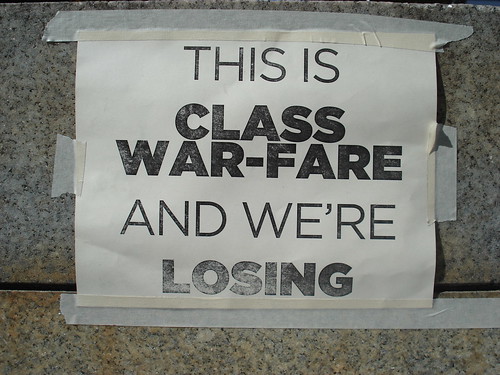
Picture 032 by King Wenclas
(For years the Underground Literary Alliance was accused of engaging in class war. Suddenly, class war has become chic.)

TWO LITERARY WORLDS REPRISE
Now that established literati have magically transformed from aristocrats to democrats (see Occupy Writers), at least in their own minds, will they stop blackballing dissident American writers?
******************
I'm reposting the link to my iNewp article, "The Tale of Two Literary Worlds," because it's a much-needed take on media realities and literary truths. See
http://inewp.com/?p=8888

I wrote the essay as a signal that, "Hey! I'm still here. The literary underground is still here."

We're still out there. Still writing. Fighting for survival. Ever fighting. Not all of us are dead yet.